

Introduction to Advertising Agencies in India
Advertising plays an essential role in shaping the perception of brands and influencing consumer decisions across different sectors. The dynamic interplay between advertisers, media platforms, and target audiences continues to drive innovation, fostering a competitive atmosphere that benefits brands and consumers alike. As brands strive to establish a strong presence, the expertise of advertising agencies becomes indispensable. These agencies are tasked with crafting compelling narratives that resonate with audiences, thereby enhancing brand recall and loyalty.
Moreover, the rise of digital media has revolutionized how advertising agencies operate. Traditional marketing channels, such as print and television, are complemented by an increasing investment in digital advertising. This shift has enabled advertising agencies to reach consumers across multiple platforms, utilizing data-driven strategies to optimize campaigns and deliver personalized content. The growing significance of digital marketing further highlights the need for advertising agencies to adapt continuously, embracing new technologies and methodologies to stay relevant in a rapidly evolving landscape.
In conclusion, the advertising industry in India is not merely a conduit for commercial messaging; it is a dynamic entity that shapes consumer perceptions and drives economic growth. As the industry continues to expand, the role of advertising agencies becomes ever more critical in navigating the complexities of this vibrant market.
Historical Perspective
The evolution of advertising agencies in India has been a remarkable journey, reflecting broader social and economic changes throughout the country’s history. Initially, during the early 20th century, advertising was primarily focused on print media. Newspapers and magazines served as the main platforms for promoting products, with advertisements often limited to text and basic illustrations. It was a time when advertising was more about informing consumers than persuading them. This nascent phase laid the groundwork for more sophisticated advertising practices as the country began to embrace modernization.
Post-independence, especially during the 1960s and 1970s, the advertising landscape witnessed a significant transformation. With a growing consumer market, agencies began to adopt innovative strategies to capture the attention of an increasingly diverse audience. The launch of iconic campaigns during this period not only showcased creativity but also marked the emergence of major advertising agencies in India. Agencies like Ogilvy & Mather and JWT began to forge their identities, focusing on storytelling and emotional connections to influence consumer behavior.
As India progressed into the liberalization era of the 1990s, the advertising industry experienced a paradigm shift. The introduction of satellite television and the internet changed how consumers received information, leading to an explosion of advertising opportunities across multiple platforms. Agencies diversified their strategies to incorporate television and, soon after, digital marketing. The rise of the internet brought both challenges and advantages for advertising agencies, pushing them to adapt their methods to engage with a more informed and tech-savvy audience.
Today, Indian advertising agencies operate in a fast-paced digital environment where data analytics and consumer insights play critical roles. The shift towards social media marketing and personalized advertising has redefined how brands communicate with consumers. This ongoing evolution reflects the changing dynamics of consumer preference and behavior, highlighting the need for agencies to continuously innovate to remain relevant in a competitive landscape. The history of advertising agencies in India is not just about the changes in media but also about understanding the underlying shifts in consumer culture that drive these changes.
Top Advertising Agencies in India
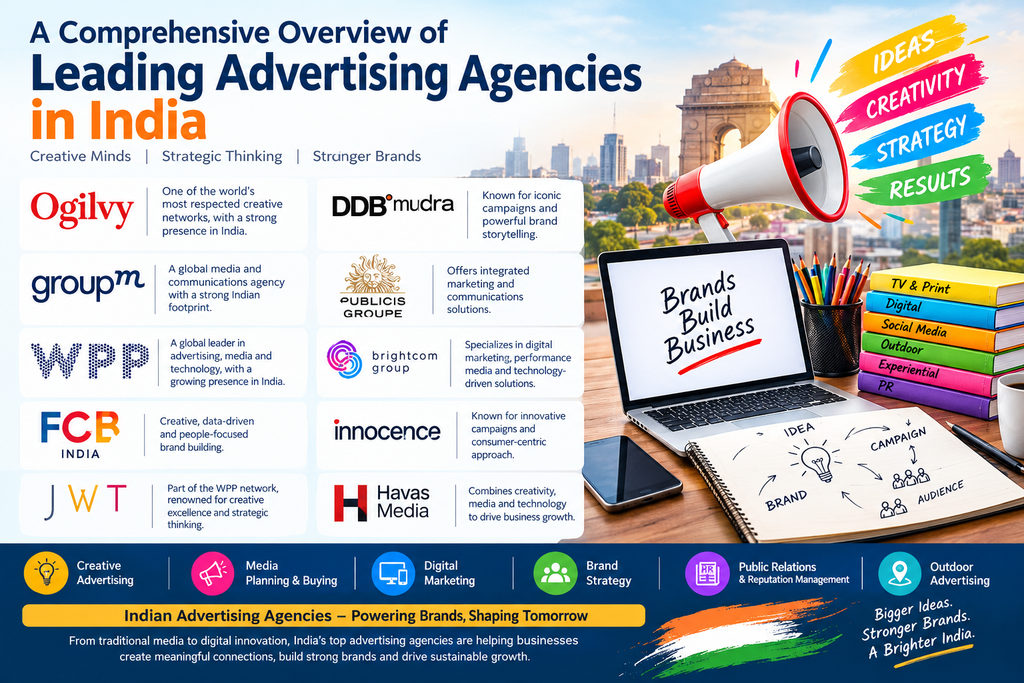
India’s advertising landscape is diverse and vibrant, featuring several leading agencies that have significantly contributed to the evolution of marketing strategies over the years. Among these, Ogilvy stands out as one of the most influential advertising agencies. Established in 1948 by David Ogilvy, this agency has become synonymous with advertising excellence in India, delivering campaigns that resonate with both consumers and brands. Notable campaigns such as “Mountain Dew’s ‘Darr Ke Aage Jeet Hai'” exemplify Ogilvy’s creative prowess and strategic insight.
Another prominent player in the Indian advertising sector is DDB Mudra, which has carved a niche for itself by combining creativity and effectiveness in its campaigns. This agency emerged in the 1980s and quickly gained recognition for its innovative approaches to branding and customer engagement. Their work for brands like “Red Label Tea” showcases DDB Mudra’s ability to tap into cultural narratives, creating impactful advertisements that drive consumer loyalty.
In addition to Ogilvy and DDB Mudra, other agencies such as Leo Burnett and Lowe Lintas have also made significant contributions to the advertising field in India. Leo Burnett, known for its iconic “Maa” campaign for Procter & Gamble’s Tide, has maintained a focus on emotional storytelling in advertising. On the other hand, Lowe Lintas has garnered attention for their well-executed campaigns, such as the “Liril Girl,” which set new benchmarks for brand engagement in the Indian market.
The advertising agencies in India, like these mentioned, not only drive the creative content of branding but also influence trends and consumer behavior through their strategic campaigns. Acknowledging their impact is essential for understanding the broader scope of marketing dynamics in the country. Their rich histories and innovative contributions continue to shape the landscape of advertising in India.
Innovative Campaigns and Case Studies
In the dynamic landscape of advertising, Indian agencies have set benchmarks with their groundbreaking campaigns that blend creativity and strategic acumen. These campaigns not only resonate with audiences but also significantly influence market trends. One of the most notable campaigns was the “Share the Load” initiative by Mumbai-based agency BBH India for its client, Fair & Lovely. This campaign challenged societal norms concerning gender roles by encouraging men to participate in household chores. Its striking narrative and emotional appeal led to widespread social discussions, thereby enhancing brand visibility and positioning.
Another exemplary initiative was the “#LetsChangeTheConversation” campaign launched by Ogilvy India. This campaign addressed mental health issues faced by the youth in India, using relatable storytelling to create an engaging dialogue. The success of this campaign lay not just in its innovative approach but also in its ability to connect with the audience on a personal level, demonstrating the power of empathy in advertising.
Furthermore, the “#InTheNameOfLove” campaign by McCann Worldgroup for the Indian fashion brand FabIndia reflected the festive spirit of India while promoting traditional attire. The compelling visuals and poignant messaging appealed to the cultural sentiments of consumers, driving significant sales during the festive season. Such case studies illustrate how creativity, when intertwined with a deep understanding of the audience, can lead to campaigns that are not merely advertisements but meaningful conversations.
These innovative advertising campaigns serve as a testament to the talent present in the Indian advertising industry. They highlight the potential of creativity in shaping public perception and driving consumer behavior. The impact of these well-crafted campaigns transcends conventional advertising, making them influential forces in contemporary marketing strategies.
Role of Digital Advertising
In recent years, the landscape of advertising in India has undergone a significant transformation, primarily driven by the growth of digital technologies and platforms. Digital advertising has emerged as a crucial element for businesses seeking to reach their target audiences effectively. With the increasing penetration of the internet and the proliferation of smartphones, businesses now have unprecedented access to consumers through various digital channels. This shift has prompted traditional advertising agencies to adapt their strategies, ensuring they remain relevant in this evolving market.
As digital advertising continues to gain traction, many established advertising firms in India have embraced this new paradigm. They have invested in developing digital capabilities, offering services such as search engine optimization (SEO), social media marketing, and content creation tailored specifically for online platforms. This adaptation is essential as clients increasingly demand measurable results and a stronger return on investment (ROI) from their advertising expenditures.
The rise of digital-only advertising firms further underscores the importance of digital advertising in India. These agencies specialize exclusively in online marketing strategies, leveraging data analytics and targeted advertising to enhance brand visibility and engagement with consumers. Such firms often utilize innovative tools and technologies, enabling them to craft highly personalized campaigns that resonate with specific audience segments.
Furthermore, digital advertising allows for agility and responsiveness, traits that are invaluable in today’s fast-paced market. Brands can launch campaigns quickly and adjust them in real time based on performance metrics. This level of flexibility is less feasible in traditional advertising modalities, which may require longer lead times for production and placement.
Overall, the role of digital advertising in India represents a fundamental shift in how brands communicate with consumers. The ability for agencies to combine traditional advertising wisdom with cutting-edge digital innovations is reshaping the advertising ecosystem, making it imperative for agencies to embrace this change to thrive in the competitive landscape.
Challenges and Opportunities in the Advertising Sector
Advertising agencies in India are currently navigating a complex landscape marked by a series of challenges that significantly affect their operations. One of the most pressing issues is the intense competition in the industry. With a plethora of firms competing for the same clients, advertising agencies are under pressure to innovate their service offerings and adopt unique positioning strategies to stand out in a crowded marketplace.
Additionally, the rapid technological advancements are reshaping the advertising sector. The rise of digital marketing has prompted traditional advertising agencies to adapt quickly or risk obsolescence. Agencies now must become proficient in utilizing digital platforms, social media marketing, and data analytics to effectively reach their target audiences. This transition requires significant investment in new technologies and talent, which can be a considerable challenge, particularly for smaller agencies.
Changing consumer preferences present another challenge. Modern consumers are increasingly seeking personalized and meaningful engagement with brands. This shift necessitates that advertising agencies not only understand their audience’s evolving needs but also develop targeted campaigns that resonate on a personal level. Agencies that can successfully leverage data to predict consumer behavior and tailor their strategies accordingly are likely to thrive.
Despite these challenges, opportunities for growth abound in the Indian advertising landscape. The increasing digital penetration offers a vast arena for agencies to explore innovative advertising solutions. Moreover, as more businesses recognize the importance of branding and online presence, the demand for strategic advertising services continues to grow. Agencies that are agile and willing to adapt to the shifting dynamics of the market are well-positioned to capitalize on these opportunities.
Ultimately, while the advertising sector in India faces numerous obstacles, the convergence of technology and changing consumer trends also fuels potential growth avenues, enabling agencies to redefine their roles in an evolving marketplace.
The Impact of Globalization on Indian Advertising
The phenomenon of globalization has significantly reshaped various sectors across the globe, with advertising in India standing out as a notable example. As international markets have become increasingly intertwined, Indian advertising has evolved to incorporate global trends, styles, and strategies. This transformation has not only impacted the approaches adopted by local agencies but has also opened avenues for foreign firms to enter the Indian market.
The entry of international advertising agencies into India marks a pivotal shift in the advertising landscape. These agencies have introduced diverse methodologies and innovative ideas that reflect a global perspective, thereby enriching the domestic advertising scene. With the influx of multinational corporations, Indian advertising agencies have had to adapt, adopting practices such as integrated marketing and data-driven advertising strategies that resonate with an international audience.
Furthermore, globalization has paved the way for cross-cultural advertising strategies. In order to cater to a diverse population, brands now aim to resonate with various cultural nuances while maintaining universal appeal. This has led to the production of advertisements that not only promote products but also bridge the gap between different cultures. As a result, campaigns tend to blend local flavors and global narrative styles, creating a rich tapestry of messaging that is both familiar and aspirational.
The influence of globalization extends to digital advertising as well. With the rise of the internet and social media platforms, brands can reach consumers in unprecedented ways. This global connectivity allows Indian advertisers to engage with global trends and larger audiences, often utilizing insights and methodologies derived from successful international campaigns. Consequently, local brands are also encouraged to adopt a more global mindset, thinking beyond regional markets as they develop their advertising strategies.
Future Trends in Advertising in India
The advertising landscape in India is rapidly evolving, driven by technology and changing consumer preferences. As we look ahead, several key trends are expected to shape the future of this dynamic industry.
One of the most significant emerging trends is the rise of influencer marketing. With the increasing penetration of social media, brands are leveraging the reach and engagement of influencers to connect with their target audiences. Influencers, often seen as more relatable and authentic than traditional celebrities, are becoming critical to advertising strategies. This trend is likely to grow, with brands focusing on partnerships with micro and nano influencers who cultivate niche followings, ensuring higher engagement rates and authenticity.
Another pivotal trend is the integration of artificial intelligence (AI) into advertising practices. AI technologies enable businesses to analyze consumer behavior data effectively, allowing for more targeted marketing campaigns. Techniques such as programmatic advertising and personalized content generation are becoming commonplace, helping brands optimize their advertising budgets and improve the effectiveness of their campaigns. The role of AI in shaping advertising strategies is set to expand, providing brands with innovative tools for engagement and interaction.
Sustainability initiatives are also gaining momentum in the advertising sector as consumers prioritize eco-conscious brands. In response, advertising agencies and brands are increasingly promoting sustainability and ethical practices within their campaigns. This strategic shift not only resonates with consumers but also positions brands as leaders in corporate responsibility, appealing to a socially aware audience.
In conclusion, the future of advertising in India is likely to be influenced heavily by these key trends. The growth of influencer marketing, the adoption of AI technologies, and a commitment to sustainability will define the strategies of successful brands as they navigate an increasingly complex market landscape. Companies that adapt to these trends will be well-positioned to thrive in the competitive advertising environment that lies ahead.
Conclusion and Key Takeaways
In reviewing the landscape of advertising agencies in India, it is evident that these firms play a crucial role in shaping the marketing strategies of businesses across various sectors. Advertising agencies not only provide creative solutions but also employ research and data analytics to understand consumer behavior and preferences. This dual approach enhances the effectiveness of marketing campaigns, ultimately driving brand visibility and sales performance.
The diversity of services offered by these agencies, ranging from traditional advertising to digital marketing solutions, reflects their ability to adapt to the rapidly changing dynamics of the market. As digital media continues to dominate, agencies that integrate innovative technologies and digital strategies are poised to lead the way. Furthermore, the increasing relevance of social media marketing demonstrates the need for agencies to remain agile and responsive to trends that influence consumer engagement.
The future prospects of advertising agencies in India appear promising. With a growing emphasis on data-driven decision making and the surge of businesses looking to enhance their market presence, the demand for skilled advertising professionals will likely increase. Moreover, as advertisers seek to create more personalized and engaging experiences for consumers, agencies capable of leveraging cutting-edge tools and platforms will have significant advantages.
In summary, advertising agencies in India are at a pivotal juncture where they can significantly influence the marketing landscape. By embracing innovation and focusing on strategic partnerships, these agencies can not only enhance their service offerings but also contribute to the broader economic development of the country. The significance of their role will likely continue to expand as they help brands navigate the complexities of modern advertising and consumer engagement.



Leave a Reply